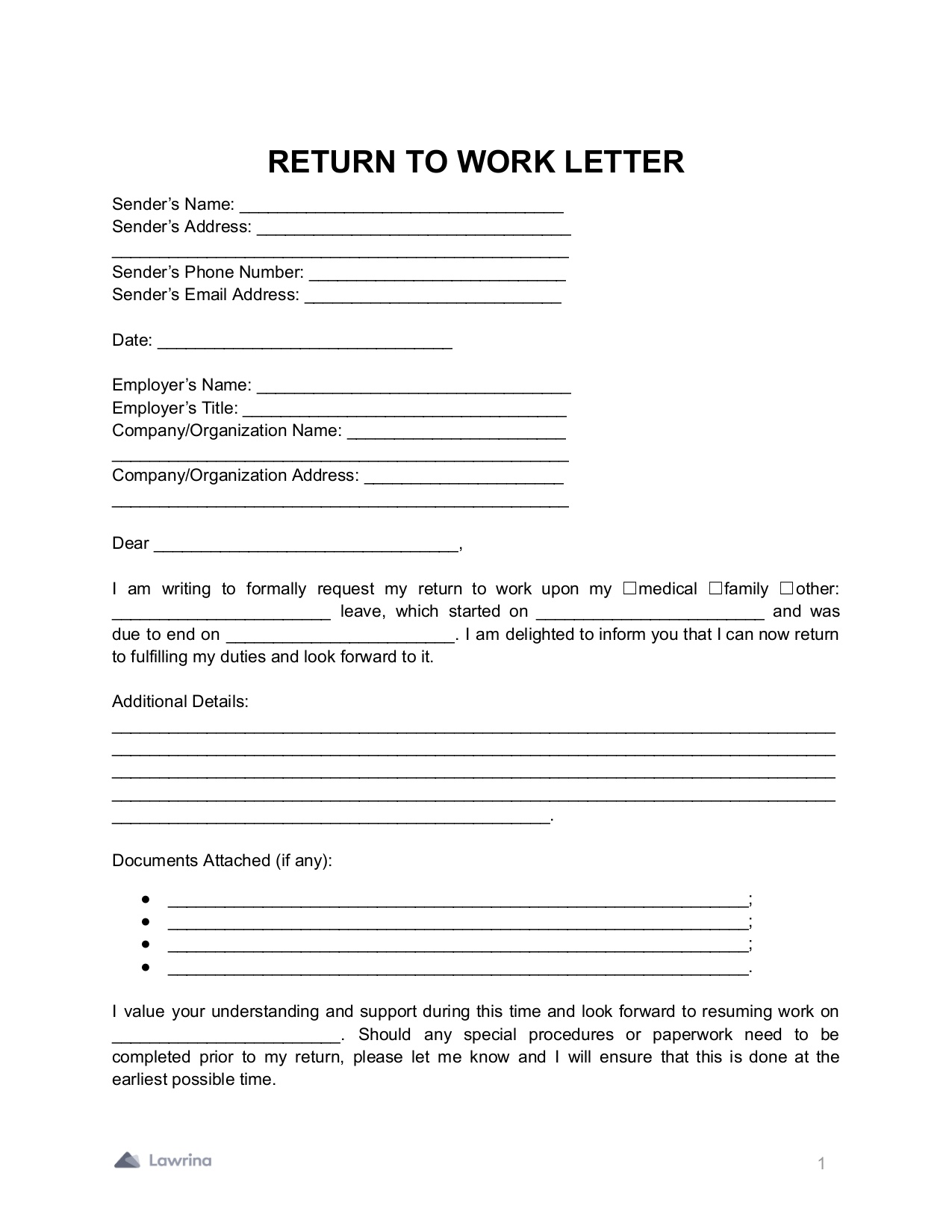
A return to work letter, also known as a return to work authorization, is a document provided by a healthcare professional that clears an employee to return to their job after a period of absence due to illness or injury. It typically includes information about the employee’s condition, any restrictions or accommodations they may need, and the date they are cleared to resume work.
Return to work letters are important for several reasons. First, they help to ensure that employees are healthy and able to perform their jobs safely. Second, they can help to protect employers from liability in the event that an employee is injured while on the job. Third, they can help to facilitate a smooth transition back to work for employees who have been absent for an extended period of time.
In some cases, a return to work letter may be required by an employer before an employee can return to work. This is especially common in cases where the employee has been absent for a long period of time or has a condition that may affect their ability to perform their job. In other cases, a return to work letter may simply be a formality that is not required by the employer.
1. Medical clearance: The letter provides medical clearance from a healthcare professional, indicating that the employee is fit to return to work.
Medical clearance is an essential component of a return to work letter. It provides written confirmation from a healthcare professional that the employee has been evaluated and is fit to return to work. This clearance helps to ensure that the employee is healthy and able to perform their job safely.
- Verification of fitness: Medical clearance verifies that the employee has recovered from their illness or injury and is no longer experiencing any symptoms that could affect their ability to work.
- Peace of mind: Medical clearance provides peace of mind for both the employee and the employer. The employee can be confident that they are healthy enough to return to work, and the employer can be confident that the employee is not a safety risk.
- Legal protection: Medical clearance can help to protect the employer from liability in the event that the employee is injured while on the job. It demonstrates that the employer took reasonable steps to ensure that the employee was fit to work.
Overall, medical clearance is an important part of a return to work letter. It helps to ensure that employees are healthy and able to perform their jobs safely, and it protects both employees and employers from liability.
2. Restrictions and accommodations
Restrictions and accommodations are an important part of a return to work letter. They help to ensure that employees can safely return to work and perform their jobs effectively.
- Modified work duties: Modified work duties may be necessary for employees who have physical or cognitive limitations that prevent them from performing their regular job duties. For example, an employee who has injured their back may be able to return to work with modified duties that do not require heavy lifting.
- Reduced hours: Reduced hours may be necessary for employees who need to gradually transition back to work after a period of absence. For example, an employee who has been out on maternity leave may be able to return to work with reduced hours until they are able to adjust to their new schedule.
- Other accommodations: Other accommodations may be necessary to help employees with disabilities perform their jobs. For example, an employee who is deaf may need a sign language interpreter or an employee who is blind may need a screen reader.
Employers are required to provide reasonable accommodations for employees with disabilities. This includes providing modified work duties, reduced hours, or other accommodations that are necessary for the employee to perform their job.
By including restrictions and accommodations in a return to work letter, employers can help to ensure that employees can safely return to work and perform their jobs effectively.
3. Date to return
The date to return is an important component of a return to work letter. It specifies the date on which the employee is cleared to return to work and is essential for several reasons:
- Communication: The date to return provides clear communication to the employee and the employer about when the employee is expected to return to work. This helps to avoid confusion and ensures that the employee is not returning to work too soon or too late.
- Planning: The date to return allows the employer to plan for the employee’s return. This may involve making arrangements for modified work duties, reduced hours, or other accommodations. It also allows the employee to plan for their return and make necessary arrangements for childcare or transportation.
- Legal protection: The date to return can help to protect the employer from liability in the event that the employee is injured while on the job. It demonstrates that the employer took reasonable steps to ensure that the employee was not returning to work too soon.
In some cases, an employee may not be able to return to work on the date specified in the return to work letter. This may be due to unforeseen circumstances, such as a worsening of the employee’s condition or a delay in receiving necessary medical clearance. In these cases, the employee should contact their employer as soon as possible to discuss the situation.
The date to return is an important part of a return to work letter. It helps to ensure that employees return to work safely and that employers are able to plan for their return. By understanding the importance of the date to return, employees and employers can work together to ensure a smooth transition back to work.
4. Employer protection
The return to work letter plays a crucial role in protecting employers from liability in the event that an employee is injured while on the job. By providing medical clearance and specifying the date of the employee’s return, the letter helps to establish that the employer took reasonable steps to ensure that the employee was fit to work.
- Documentation of fitness: The return to work letter provides written documentation that the employee has been evaluated by a healthcare professional and is fit to return to work. This documentation can be used to demonstrate to insurance companies or other parties that the employer took reasonable steps to ensure that the employee was not returning to work too soon.
- Notice of restrictions: The return to work letter may also include any restrictions or accommodations that the employee may need. This information can help to prevent the employee from being assigned to tasks that they are not yet able to perform, reducing the risk of injury.
- Communication: The return to work letter provides clear communication to the employee and the employer about when the employee is expected to return to work. This helps to avoid confusion and ensures that the employee is not returning to work too soon or too late.
Overall, the return to work letter is an important tool that can help to protect employers from liability in the event that an employee is injured while on the job. By providing documentation of the employee’s fitness to work, communicating any restrictions or accommodations, and establishing a clear date of return, the letter helps to ensure that the employer has taken reasonable steps to protect the employee and the workplace.
5. Smooth transition
A return to work letter is not only crucial for ensuring the employee’s fitness to return to work and protecting the employer from liability but also plays a significant role in facilitating a smooth transition back to work for employees who have been absent for an extended period of time. This is particularly important for employees who may have experienced a significant change in their physical or mental health, or who may have been out of the workforce for a prolonged period.
- Re-acclimatization to the workplace: After an extended absence, employees may need time to re-adjust to the workplace environment, their colleagues, and their job responsibilities. A return to work letter can help to ease this transition by providing clear expectations and guidance.
- Gradual return to work: In some cases, employees may benefit from a gradual return to work, such as working reduced hours or taking on modified duties initially. A return to work letter can help to facilitate this by outlining a plan for a phased return.
- Support from colleagues and supervisors: Returning to work after an extended absence can be daunting, and employees may appreciate support from their colleagues and supervisors. A return to work letter can help to foster this support by informing colleagues and supervisors of the employee’s return and any accommodations they may need.
- Reduced risk of re-injury or relapse: By providing clear guidance and support, a return to work letter can help to reduce the risk of re-injury or relapse for employees who have been absent due to illness or injury.
Overall, a return to work letter can play a vital role in facilitating a smooth transition back to work for employees who have been absent for an extended period of time. By providing clear expectations, guidance, and support, a return to work letter can help employees to return to work safely and successfully.
Frequently Asked Questions about Return to Work Letters
Return to work letters are an important part of the process of returning to work after an absence due to illness or injury. Frequently asked questions about return to work letters include:
Question 1: What is a return to work letter?
A return to work letter is a document provided by a healthcare professional that clears an employee to return to work after a period of absence due to illness or injury. It typically includes information about the employee’s condition, any restrictions or accommodations they may need, and the date they are cleared to resume work.
Question 2: Who needs a return to work letter?
A return to work letter may be required by an employer before an employee can return to work, especially in cases where the employee has been absent for a long period of time or has a condition that may affect their ability to perform their job.
Question 3: What information is included in a return to work letter?
A return to work letter typically includes the following information:
- Employee’s name
- Date of the letter
- Healthcare professional’s name and contact information
- Employee’s diagnosis or condition
- Any restrictions or accommodations the employee may need
- Date the employee is cleared to return to work
Question 4: What are the benefits of a return to work letter?
Return to work letters provide several benefits, including:
- Ensuring that employees are healthy and able to perform their jobs safely
- Protecting employers from liability in the event that an employee is injured while on the job
- Facilitating a smooth transition back to work for employees who have been absent for an extended period of time
Question 5: How long is a return to work letter valid for?
The validity period of a return to work letter varies depending on the employee’s condition and the healthcare professional’s recommendations. In some cases, a return to work letter may be valid for a few weeks, while in other cases it may be valid for several months.
Question 6: What should I do if I have questions about my return to work letter?
If you have any questions about your return to work letter, you should contact your healthcare professional or your employer’s human resources department.
Return to work letters are an important part of the process of returning to work after an absence due to illness or injury. By understanding the purpose and benefits of return to work letters, employees and employers can work together to ensure a safe and smooth transition back to work.
Transition to the next article section: Understanding Your Rights and Responsibilities as an Employee
Tips for Writing a Return to Work Letter
A return to work letter is an important document that serves several key purposes. It ensures that employees are healthy and able to perform their jobs safely, protects employers from liability, and facilitates a smooth transition back to work for employees who have been absent for an extended period of time. Here are a few tips for writing a return to work letter:
Tip 1: Include all necessary information
Your return to work letter should include the following information:
- Your name
- Date of the letter
- Healthcare professional’s name and contact information
- Your diagnosis or condition
- Any restrictions or accommodations you may need
- Date you are cleared to return to work
Tip 2: Be clear and concise
Your return to work letter should be clear and concise. Avoid using medical jargon or technical terms that your employer may not understand. Write in a way that is easy to read and understand.
Tip 3: Get your doctor’s signature
Your return to work letter should be signed by your healthcare professional. This will provide your employer with proof that you have been cleared to return to work.
Tip 4: Submit your letter to your employer promptly
You should submit your return to work letter to your employer as soon as possible. This will give your employer time to make any necessary arrangements for your return.
Tip 5: Be prepared to discuss your return to work
You may be asked to meet with your employer to discuss your return to work. Be prepared to answer questions about your condition and any restrictions or accommodations you may need.
By following these tips, you can help to ensure that your return to work is smooth and successful.
Summary of key takeaways or benefits
- A well-written return to work letter can help to ensure a smooth and successful return to work.
- A return to work letter should include all necessary information, be clear and concise, and be signed by your healthcare professional.
- You should submit your return to work letter to your employer promptly and be prepared to discuss your return to work.
Transition to the article’s conclusion
Returning to work after an absence can be a challenging experience. By following these tips, you can help to make the transition as smooth and successful as possible.
Return to Work Letter
The return to work letter plays a pivotal role in ensuring a safe and smooth transition back to work for employees who have been absent due to illness or injury. It serves as a crucial form of communication between healthcare professionals, employees, and employers, providing essential information about the employee’s fitness to return to work, any necessary restrictions or accommodations, and the date of their return.
By understanding the importance and benefits of return to work letters, employees and employers can work together to facilitate a successful return to work. These letters not only protect the health and well-being of employees but also safeguard employers from potential liability and ensure a smooth resumption of work activities. By following the recommended tips for writing a return to work letter, employees can effectively communicate their medical status and any necessary accommodations, while employers can make informed decisions regarding the employee’s return to work.
Ultimately, the return to work letter is a valuable tool that enables employees to safely and confidently resume their work responsibilities while ensuring that employers fulfill their duty of care and maintain a safe and productive work environment. Its significance lies in fostering a collaborative approach between employees and employers, prioritizing the well-being of both parties, and promoting a positive and healthy return to work.